How to Check if Gold Is Real in Saudi Arabia: 8 Reliable Tests
By Editorial team ·
Higher gold prices attract more fakes, from plated jewellery to pieces stamped with the wrong karat. Use these 8 tests, from easiest to most accurate.
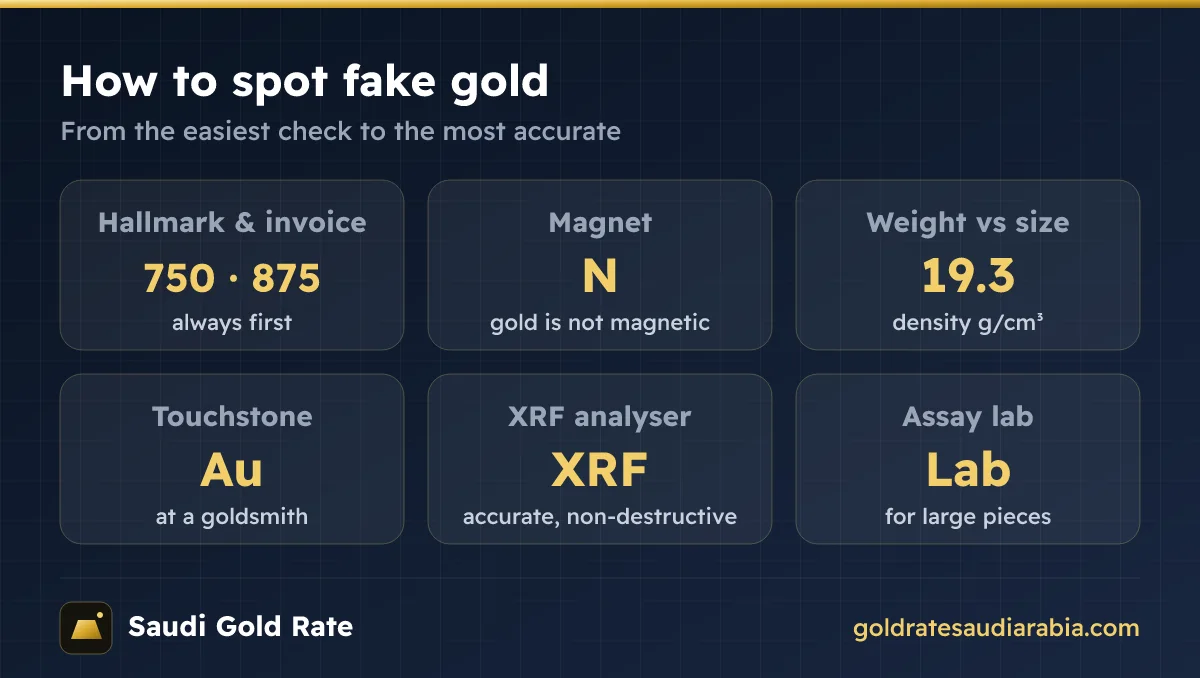
1. Read the hallmark
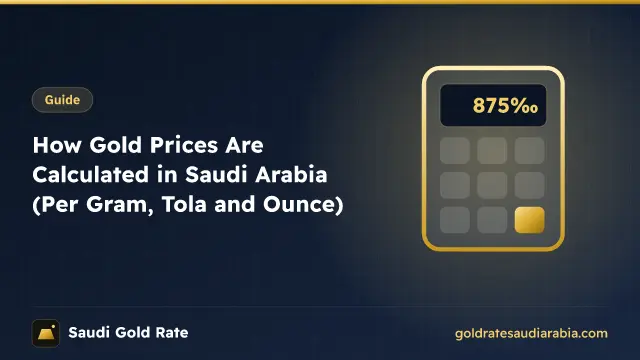
Genuine gold carries a stamp showing purity: 750 (18K), 875 (21K), 916 (22K) or 999 (24K), or the karat itself (e.g. 21K), plus a maker's mark. Use a magnifier; real stamps are crisp.
2. Insist on an itemised invoice
Weight, karat, price per gram and making charge. Reputable shops provide it without hesitation, and it helps when you resell.
3. Magnet test
Gold is not magnetic. Strong attraction means a plated base metal. No attraction does not prove authenticity, though.
4. Weight versus size
Gold is very dense (about 19.3 g/cm³). Fakes often feel light for their size. Branded bars have published dimensions you can compare.
5. Look for wear marks
Plated pieces show a different colour at edges, clasps and rubbing points as the thin layer wears off.
6. Touchstone and acid
A jeweller rubs the piece on a black stone and applies acid; real gold leaves a lasting streak. Leave this to professionals as it can scratch.
7. XRF analyser
Many Saudi gold shops have X-ray fluorescence machines that show the exact gold content in seconds without damaging the piece. Ask for a scan before buying or selling.
8. Assay laboratory
For high-value bars or collections, an accredited lab can issue a formal certificate.
Red flags
- Prices far below the current gram rate (434.92 SAR for 21K).
- No invoice or refusal to test.
- Blurred or missing hallmarks.
- Unknown sellers on social media.
Learn more: 22K vs 24K vs 21K gold.
FAQ
Does real gold stick to a magnet?
No. Gold is not magnetic, but passing the magnet test alone does not prove it is real.
What does 875 mean on gold?
It means 87.5% gold, which is 21 karat.
Can gold be tested without damage?
Yes. An XRF analyser gives an accurate reading in seconds without harming the piece.